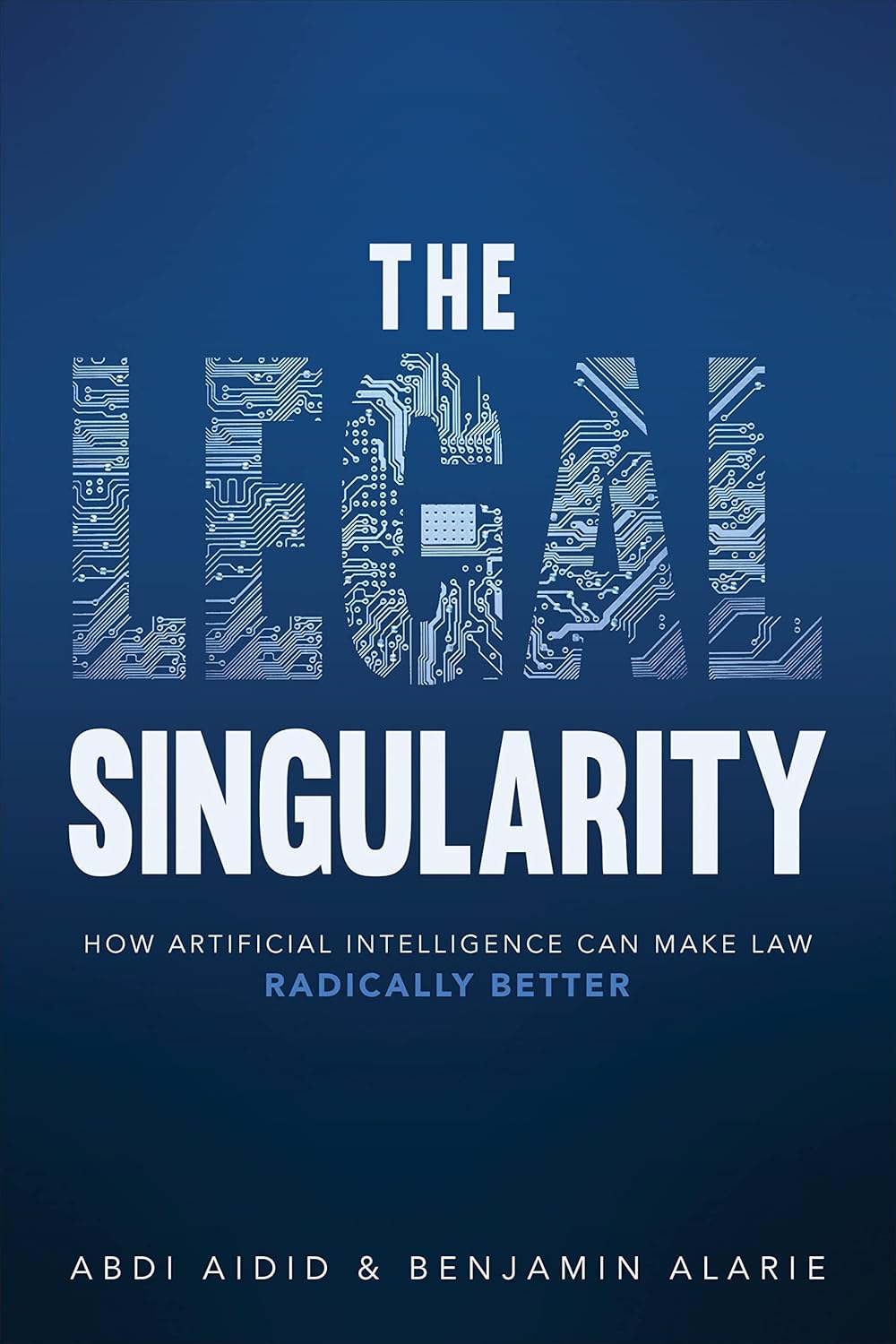
The Legal Singularity
How artificial intelligence can make law radically better.
Order the BookOr start free: the 2016 paper that named the thesis. Or listen: the audiobook.
Out now Superjustice: Law in the Age of Artificial Intelligence, the successor to this book, by Samuel I. Becher and Benjamin Alarie. Oxford University Press, hardcover 30 July 2026. superjustice.com →
About the Book
The Legal Singularity argues that AI can make law more predictable, coherent, and fair. Aidid and Alarie examine the limits of today's legal institutions and show how legal prediction could transform the way law is interpreted, applied, and delivered. The result is an ambitious case for what they call the legal singularity: a future state in which law becomes functionally complete.
The legal singularity is the point at which law reaches functional completeness: practically any legal question can be resolved quickly and justly, and the law becomes knowable with practical, though not perfect, certainty across much of human activity.
The term was coined by Benjamin Alarie in "The Path of the Law: Towards Legal Singularity", (2016) 66(4) University of Toronto Law Journal 443, and developed at book length in The Legal Singularity (Aidid & Alarie, University of Toronto Press, 2023). This page is the term's canonical home.
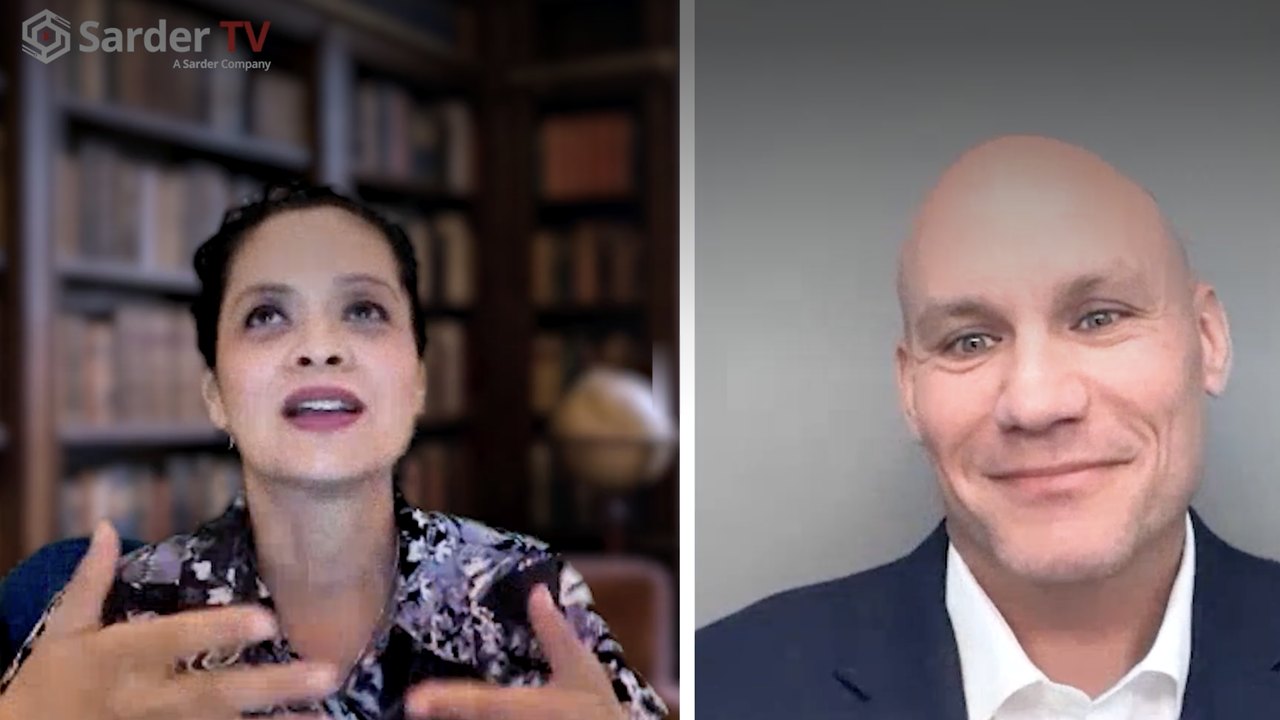 Watch from 25:50Benjamin Alarie on why he coined “legal singularity” in 2016 and how the argument developed into Superjustice. Sarder TV, 5 August 2026.
Praise
A powerful and important book. The fundamental insight, that artificial intelligence will transform not just the specific content of legal rules but the general nature of law, is surely correct. Essential reading for legal theorists.
Daniel Markovits Guido Calabresi Professor of Law, Yale Law SchoolA compelling case that law as we know it will change dramatically, and that justice will be the biggest beneficiary.
Lawrence Lessig Roy L. Furman Professor of Law and Leadership, Harvard Law SchoolTimely, challenging, and profound. A book that deserves to be read widely by naysayers and evangelists alike.
Richard Susskind OBE KC (Hon) Author of Tomorrow's LawyersIndependent reviews and responses.
The endorsements above were gathered before publication. The reviews and responses that followed appeared in venues the authors do not control; several are critical, and the most recent is a full-length rejection of the book’s programme. The newest are below. The full record, with the scholarly responses to the 2016 thesis that the book’s fifth chapter answers, is on its own page.
-
2026
SSRN Christopher Markou, “Engineered Autopoiesis: Why the Legal Singularity Is Not a Perfected Legal Order.” Critical: a full-length rejection of the book’s programme. Response
-
2026
Canadian Journal of Law and Technology Matthew Tse, “Considering the Concept of Law in the Legal Singularity.” A scholarly article rather than a review: places the legal singularity in the tradition of classical legal thought and argues that it inherits some of that tradition’s theoretical shortcomings, while finding many existing critiques of the thesis overstated or misguided. Response
-
2025
Canadian Law Library Review, republished at Slaw Allison Harrison, book review. Favourable: a meticulously organized text with relevant examples, though the reviewer would have preferred a deeper analysis of fewer topics.
Ten chapters and an afterword.
- Law today is incomplete, inaccessible, and expensive to administer.
- Machine prediction of legal outcomes is maturing fast, and the authors have built it in production.
- As prediction improves, it reconfigures legal institutions, practice, and access to justice.
- The end state is the legal singularity: functionally complete law, vastly more knowable, fairer, and clearer for its subjects.
The book opens by introducing the legal singularity and recounting the history of legal information, then defines computational law and develops the idea of complete law. A full chapter, "Defending the Legal Singularity from Its Critics," takes the objections head on. Three chapters work through the implications for the judiciary, for lawyers and the public, and for governments; a chapter on ethics, a conclusion, and an afterword on ChatGPT close it. The chapter records are at the publisher's page.
Why read it in 2026? The book was written before the newest generation of AI systems, and that is the point: its argument is about the trajectory of legal prediction, not any one model. The trajectory has only steepened since 2023, and the later work below carries it forward.
The argument's origin is free to read: The Path of the Law: Towards Legal Singularity, the 2016 University of Toronto Law Journal paper that named the term, is the thesis in seed form, at no cost.
From prediction to redesign.
The Legal Singularity argued that AI-enabled prediction can make law practically complete and knowable. Superjustice (Oxford University Press, hardcover 30 July 2026, by Samuel I. Becher and Benjamin Alarie) asks how entire legal systems should be redesigned once those capabilities exist. It is out now in print, ebook and audio, and its complete Introduction is free on SSRN. Between the two sit LexOptima (2025) and Legal Order in the Age of AI Agents (2026); in practice, Blue J applies the trajectory to tax.
Get Superjustice

Order the Book
Choose your preferred retailer.